
- Ombudsman report reveals the barriers to effective commissioning of wheelchair services that have left people facing delays of months or even years for vital equipment.
- Call for Government and NHS England to deliver a more consistent, national approach to improve the lives of wheelchair users.
- Complaints to the Ombudsman about wheelchair services have significantly increased in five years. A three-year-old boy missed starting nursery after waiting seven months for a wheelchair and a man waited over two years to receive a working wheelchair.
The safety, dignity, and independence of people who rely on wheelchairs to live a full life is being compromised by poorly commissioned services, according to a new report by the Public Service Ombudsman.
People have been left unable to work or go to school, live independently, and enjoy social activities because they have not been able to get a wheelchair or repairs to their wheelchair for months or, in some cases, years.
The Ombudsman’s report, 'Strengthening NHS wheelchair services: commissioning with confidence’, says this is the result of issues in the commissioning - the way healthcare is designed, funded and organised to meet local needs - of wheelchair services across the NHS.
The Ombudsman has seen a significant rise in complaints about wheelchair services, from eight in 2020/21 to 110 in 2025/26. More than 80% of these complaints concern services that are delivered by an independent provider rather than within the NHS, with the majority about people waiting far longer than the 18-week target, for new wheelchair equipment or parts.
Ombudsman Paula Sussex CBE said:
“For people who rely on a wheelchair, delays, unsuitable equipment or poor repairs can affect every part of their life. There can be profound consequences from physical pain and emotional distress to limiting their ability to live full lives.
“Getting wheelchair services right is also an investment in the wider economy - enabling children to access education and adults to work, and to live independently can help reduce inequalities and avoid greater costs to health and social care in the longer term.
“The experiences highlighted in our report show why wheelchair services must be designed around people’s needs and the outcomes that matter to them.”
In one case, six-year-old Elliot Cruz Gardiyanoglu, who has cerebral palsy, was left without a suitable wheelchair for seven months. He was three at the time, and without the wheelchair he was unable to attend nursery. This meant he missed out on education as well as receiving the specialist therapies provided there.
Elliot also fell and injured himself multiple times from an adapted buggy his parents had to use while they waited for the right equipment.
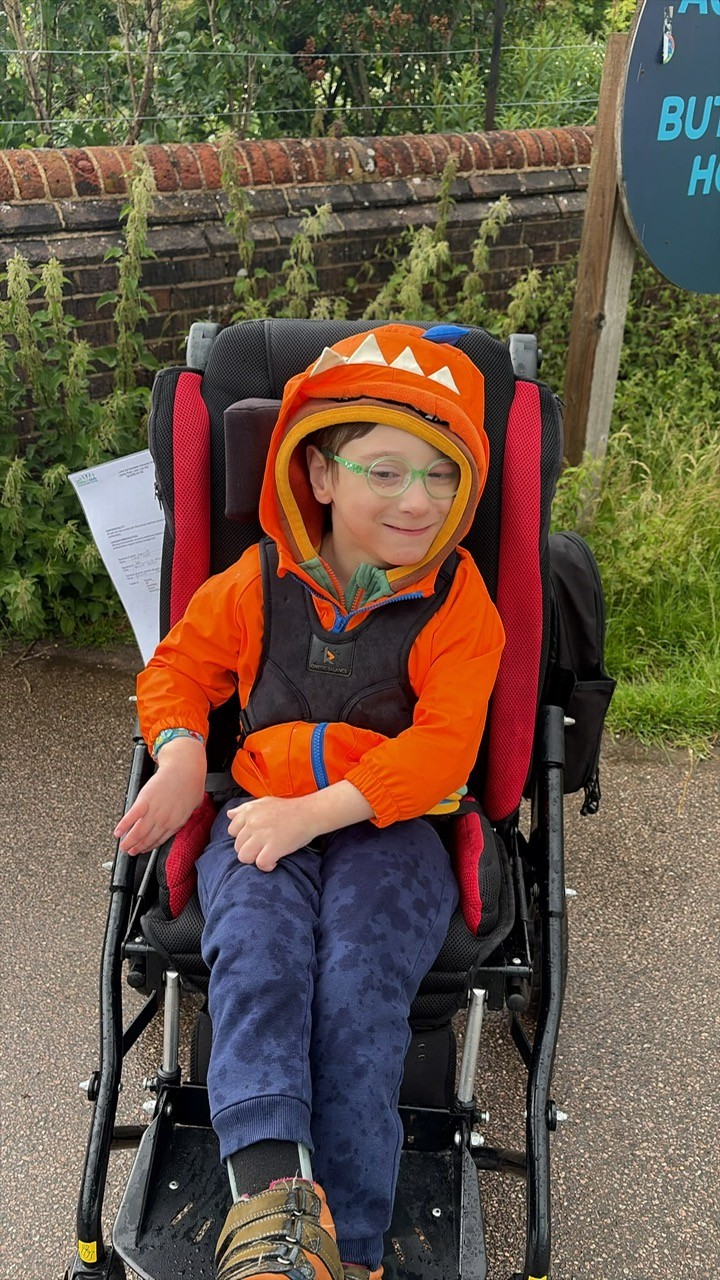
Elliot's mother Jania Cruz, 39, from Hertfordshire said:
"We were never told there would be such a long wait for the wheelchair. If we had known we would have explored other ways to get it, especially so that Elliot did not miss out on starting nursery at the same time as his twin brother. That was very hard for him to see his brother going to school while he couldn't.
"Elliot needs a wheelchair because he cannot sit up or walk unassisted. We had to do the best we could with a pram while we waited, but it was very hard and we couldn't understand why it was so difficult to get equipment that had been requested by his physio.
"We were still trying to wrap our heads around the diagnosis and understand what the future would look like and instead of having support, everything felt like a battle. I hope this report from the Ombudsman will help to improve the situation not just for us but for others too."
In another case, a man was assessed as urgently needing a replacement chair but did not receive one that met his needs for over two years.
Graham Woolner, 68, of Bishops Stortford was diagnosed with spinal muscular atrophy as a child. The condition is degenerative and he has relied on a wheelchair for over 15 years.
Graham should have got the chair no later than August 2023. However, he did not receive the chair until September 2024, and it did not work properly. Graham only received a new fully working chair in October 2025.
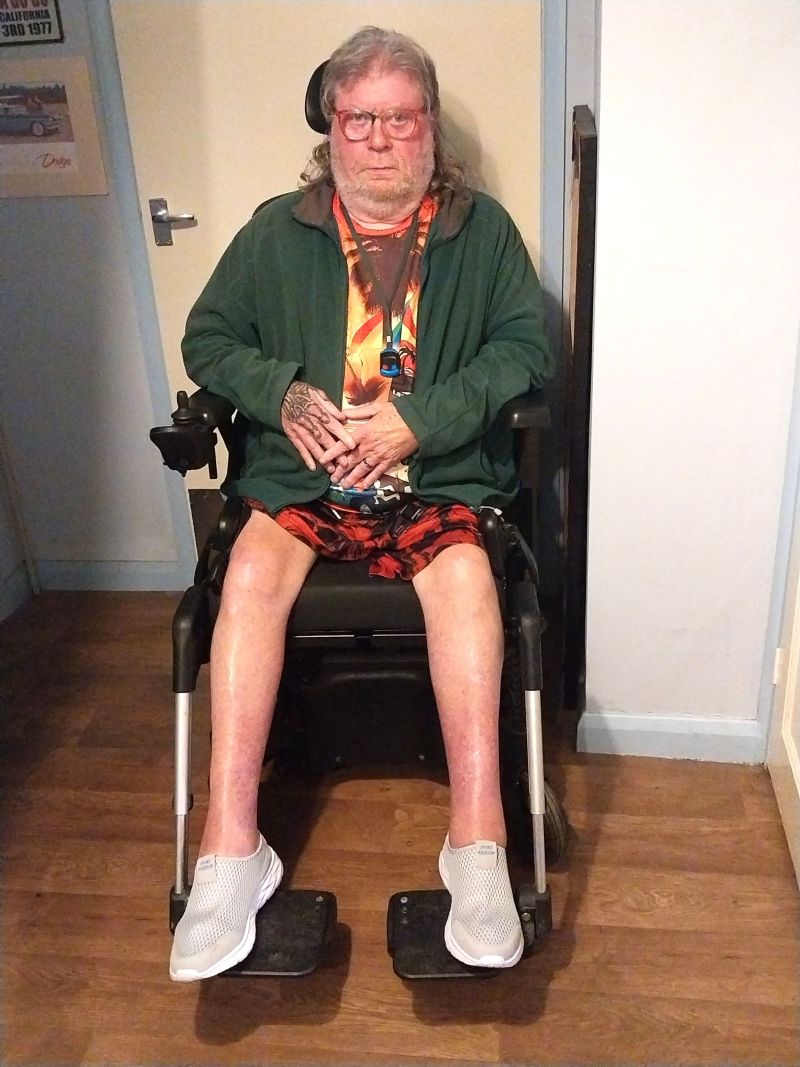
Graham said:
"The wheelchair they gave me, after a year of waiting, broke on the first day. I only made it 100 yards before the batteries died. The battery issue was never resolved so I couldn't go anywhere for a year with any certainty that I would get there and back.
"I like to be independent, go to town, and take my dogs for a walk but it got to the point where I wouldn't go out without my son in case I needed him to push me home. The wheelchair is effectively my legs, I need it to live my daily life."
Integrated Care Boards (ICBs) are the NHS bodies responsible for commissioning and developing wheelchair services in their areas, but the Ombudsman found several barriers that are preventing them from doing this effectively.
These include unreliable information about the level of need, an uncompetitive wheelchair provider market, and unclear escalation routes when providers underperform. There is also poor information-sharing across ICBs, funding arrangements and eligibility criteria that don't support social, educational and employment outcomes for people with disabilities, and a lack of focus on using complaints and feedback to improve services and measure outcomes.
The Ombudsman has made a small number of focused recommendations to Government and NHS England (NHSE) to improve wheelchair services across the country. These include collecting reliable data on the number of wheelchair users and establishing stronger national oversight of wheelchair services.
It has also recommended that NHSE should make sure its Strategic Commissioning Development Programme, an initiative to strengthen ICB's capabilities, equips the boards to commission sustainable, person-centred services. NHSE should also develop a consistent national approach to measuring and using wheelchair users’ experiences to improve services.
Paula Sussex CBE added:
"The voice of people who use wheelchairs is not being listened to enough. Complaints are a powerful source of insight about the issues that need to be tackled, but the current system is not set up to unlock that power.
“Local NHS bodies responsible for planning these services work in a challenging environment. National action is needed to improve wheelchair services so they meet people’s needs. This means better data collection and sharing, a stronger focus on person-centred care and outcomes, and closing the regulatory gap. That is how we can build a service that people can truly depend on to meet their needs.”
Most of the complaints about independent providers made to the Ombudsman relate to AJM Healthcare. In 2024, the Ombudsman wrote to the company to share her concerns about the growing number of complaints and seek reassurance the rise would be investigated.
Since then, AJM’s management team has changed, they have accepted our investigations’ findings and recommendations and taken a proactive approach to providing remedies for all complainants.
Paula Sussex said:
"We have been working constructively with AJM over the past two-and-a-half years to support them in making improvements that will help those who use its service. I am pleased to see they have taken accountability, positive action, and are committed to continue working on the quality of their service."
Mat Pickering, Chief Executive Officer of AJM, said:
“From conversations and our work with the Ombudsman, we have changed how we support wheelchair users. We now manage waiting lists more effectively, keep people better informed about their wait, work more closely with commissioners and suppliers, and we have overhauled our complaints process.
“We welcome this report and its recommendations. The challenges facing wheelchair services can be resolved with the right focus and leadership. We look forward to working with the NHS, Government, the Wheelchair Alliance and wheelchair users to make sure these recommendations deliver real change to the sector.”
Nick Goldup, CEO of the Wheelchair Alliance, said:
“This report marks a significant milestone for the Wheelchair Alliance and wheelchair users, whose voices we work hard to ensure are heard. It follows years of research, lobbying and campaigning for people to receive the right wheelchair at the right time, and more than a year of close working with the Public Service Ombudsman to examine the systemic problems currently facing wheelchair services.
“We welcome the report’s recognition of issues we have consistently raised, including unreliable data, gaps in accountability and failures to listen to people when things go wrong.
“Behind every delay or unsuitable wheelchair is someone whose life is being restricted - a child missing school, an adult unable to work, or someone losing their independence. Getting wheelchair provision right means giving people the freedom to live their lives and to enable them to contribute meaningfully to society.
“We are proud to host the report launch in Westminster with the Public Service Ombudsman, it is an important opportunity to bring decision-makers and wheelchair users together to share its findings. We want to see these recommendations translated into lasting improvements, with wheelchair users involved in shaping services and success measured by the difference those services make to their lives.”